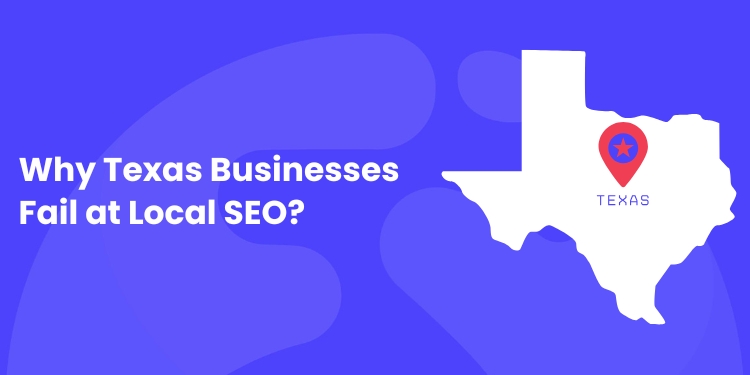
Why Most Texas Businesses Fail at Local SEO (And How to Fix It Fast)?

Texas businesses face difficulties with local ranking despite their efforts and financial investment in SEO. The problem results from poor execution of responsible planning. Curved Sphere has observed that businesses searching for Best SEO Services Dallas often treat local SEO as a task which they complete instead of using it as a system for their ongoing business development.

The main reasons Texas businesses fail at local SEO will be explained through our first section which demonstrates effective solutions for immediate implementation.

Why Most Texas Businesses Fail at Local SEO?

1. Treating Local SEO as a One-Time Setup

One of the biggest mistakes businesses make is thinking SEO is a “set it and forget it” process. They create a website, add keywords, and expect results to follow.

Local SEO requires ongoing work. The search engines change their ranking systems while businesses improve their operational methods and consumer preferences develop over time. Your rankings will experience gradual decline because your website needs both updates and optimization work.

2. Inconsistent NAP Information

Local SEO requires ongoing work. The search engines change their ranking systems while businesses improve their operational methods and consumer preferences develop over time. Your rankings will experience gradual decline because your website needs both updates and optimization work.

Even small inconsistencies (like “St.” vs “Street”) can confuse search engines and create trust issues. These “distrust signals” reduce your chances of ranking in local search results.

3. Neglected Google Business Profile (GBP)

Many businesses claim their Google Business Profile but never optimize it.

Your chances of appearing in the Google Map Pack which receives most local clicks will decrease because of an incomplete or outdated profile. Google interprets missing information about business hours and categories and services and images as proof that a business is not operational.

4. Targeting Broad, Non-Local Keywords

Trying to rank for general keywords like “best plumber” or “top digital marketing agency” is a losing game.

Local customers search with intent phrases like “emergency plumber Dallas TX” or “SEO company in Houston”. Your content must match user intent because this requirement determines which users will become potential customers.

5. Poor Review Management

Reviews are one of the most powerful ranking and trust factors in local SEO.

Businesses that fail to:

  • Ask for reviews
  • Respond to customer feedback
  • Address negative reviews

…often lose both rankings and customer trust. A strong review profile can be the difference between getting a click or being ignored.

6. Lack of Location-Specific Content

Generic content doesn’t work for local SEO.

If your website doesn’t mention local areas, neighborhoods, or landmarks like Reunion Tower in Dallas or The Woodlands in Houston, search engines struggle to connect your business to a specific location.

Local relevance is key.

7. Poor Mobile Optimization

More than 60% of local searches happen on mobile devices. If your website:

  • Loads slowly
  • Isn’t mobile-friendly
  • Has poor navigation

…users will leave instantly. High bounce rates signal poor user experience, which negatively impacts rankings.

How to Fix Local SEO Fast

1. Fully Optimize Your Google Business Profile

Your GBP is your most powerful local SEO asset.

Make sure you:

  • Add accurate business information
  • Upload high-quality images
  • Select correct categories
  • Post weekly updates
  • Enable messaging and Q&A

An active profile tells Google your business is relevant and trustworthy.

2. Audit and Standardize Your NAP

Use tools like Moz Local or BrightLocal to scan your business listings.

Fix inconsistencies across:

  • Business directories
  • Social media platforms
  • Review sites

Consistency builds trust and trust improves rankings.

3. Use Hyper-Local Keywords

Focus on keywords that match buyer intent.

Instead of broad terms, use:

  • “Best SEO services Dallas”
  • “Affordable web design Houston”
  • “Local marketing agency Austin TX”

These keywords attract users who are ready to take action.

4. Create City-Specific Landing Pages

If you serve multiple areas, don’t rely on one generic page.

Create dedicated pages for each location, such as:

Each page should include unique content, local keywords, and relevant information to improve visibility.

5. Implement Local Schema Markup

Adding Local Business schema to your website helps search engines better understand your business details.

This can improve how your business appears in search results, including:

  • Contact info
  • Business hours
  • Location details

It’s a technical step but highly effective.

6. Build Strong Local Backlinks

Not all backlinks are equal. For local SEO, quality matters more than quantity.

Focus on:

  • Local business directories
  • Chamber of Commerce listings
  • Community sponsorships
  • Local blogs and news sites

These signals strengthen your authority in a specific geographic area.

7. Improve Website Speed & Mobile Experience

A fast, mobile-friendly website is essential.

Make sure your site:

  • Loads in under 3 seconds
  • Has responsive design
  • Offers easy navigation
  • Uses clear call-to-action buttons

Better user experience leads to higher engagement—and better rankings.

8. Develop Locally Relevant Content

Content is still king but only if it’s relevant.

Create blogs and pages that:

  • Mention local events
  • Highlight neighborhoods
  • Address local problems
  • Use location-based keywords

This builds stronger local signals and improves visibility.

Final Thoughts

The competitive environment for local SEO in Texas presents advantages and challenges to businesses.

The businesses that succeed are not necessarily the biggest they’re the ones using smarter, more consistent strategies. You should develop an SEO system which will evolve with your business needs instead of treating SEO as a single task.

At Curved Sphere, we help businesses turn missed opportunities into measurable growth by implementing data-driven local SEO strategies that actually work.

Your business needs immediate attention because it cannot be found in essential locations which include local search results. The foundation needs urgent repairs because your business needs to establish effective local presence.

Game-Changing Local SEO Tools You Can’t Ignore

In 2026, local SEO is no longer optional for businesses that want to attract customers in their area. With the increasing use of mobile devices and “near me” searches, appearing in local search results can directly impact revenue. Businesses that dominate local search appear in Google Maps, the Local Pack, and other location-based results, giving them a competitive edge.

However, optimizing for local SEO requires more than just creating a Google Business Profile. It involves managing accurate listings, monitoring reviews, analyzing competitors, and tracking rankings across multiple locations. Partnering with the best SEO services in Dallas or using the right tools can simplify these tasks and provide actionable insights. This guide highlights 11 essential local SEO tools that businesses should consider to improve visibility, increase customer engagement, and drive more leads.

1. Semrush Local

Semrush Local is an advanced tool for businesses and agencies managing multiple locations. It extends the traditional SEO features of Semrush with local-specific functionalities.

Benefits:

  • Centralized management of business listings across directories

  • Local rank tracking by city or ZIP code for hyper-local analysis

  • Review monitoring to protect online reputation

  • Competitor insights for strategic planning

Semrush Local is particularly valuable for franchises or multi-location businesses that need consistent visibility in local search results.

2. BrightLocal

BrightLocal is designed specifically for small and medium-sized businesses. It focuses on citations, reviews, and local rankings.

Benefits:

  • Tracks and maintains accurate business listings across directories

  • Monitors and responds to reviews efficiently

  • Generates detailed local ranking reports

  • Provides actionable analytics for local SEO optimization

Its simplicity and focused tools make it ideal for business owners without extensive SEO expertise.

3. Google Business Profile (GBP)

Google Business Profile is the cornerstone of local SEO. A well-optimized profile increases visibility in Google Maps and Local Pack searches.

Benefits:

  • Ensures your business appears in relevant local searches

  • Enables posting updates, offers, and images to engage customers

  • Provides insights on customer interactions and search performance

  • Builds trust and credibility with potential clients

Maintaining an optimized GBP profile is essential for any business looking to capture local customers.

4. Local Falcon

Local Falcon offers a unique geographic visualization of search rankings. It shows how a business ranks in specific neighborhoods within a city.

Benefits:

  • Visualizes rankings across a grid for different locations

  • Identifies areas requiring SEO improvements

  • Compares performance with competitors in each region

  • Helps plan localized marketing campaigns

Local Falcon’s heatmaps provide clear, actionable insights for location-specific SEO strategy.

5. Moz Local

Moz Local helps businesses maintain consistent and accurate information across online directories.

Benefits:

  • Synchronizes Name, Address, and Phone (NAP) information

  • Monitors reviews and reputation

  • Alerts for duplicate or incorrect listings

  • Enhances local search visibility through consistent data

Consistency across directories is critical for search engines to trust your business information.

6. Localo

Localo provides AI-driven guidance to improve local SEO performance and manage tasks efficiently.

Benefits:

  • Step-by-step action plans for local SEO optimization

  • Audits Google Business Profiles for improvement opportunities

  • Detects unauthorized or incorrect profile changes

  • Offers AI-based recommendations to boost rankings

Localo is suitable for businesses looking for automated guidance without deep SEO expertise.

7. Yext

Yext focuses on digital knowledge management, ensuring your business information is accurate and consistent across platforms.

Benefits:

  • Real-time updates across multiple directories

  • Monitors and tracks reviews and customer feedback

  • Provides performance analytics for multi-location businesses

  • Supports API integrations for large-scale management

Yext is ideal for franchises or businesses with numerous locations needing uniform visibility.

8. Search Atlas

Search Atlas integrates AI tools for analyzing local SEO performance alongside competitor insights.

Benefits:

  • Tracks rankings for hyper-local keywords

  • Provides competitor analysis in specific locations

  • Recommends AI-based content improvements

  • Generates custom dashboards for monitoring performance

Search Atlas is especially useful for businesses seeking data-driven local content strategies.

9. Local Dominator

Local Dominator combines rank tracking, citation management, and SERP monitoring in a single platform.

Benefits:

  • Measures visibility in local SERPs

  • Tracks Share of Voice in specific regions

  • Consolidates reporting for multiple locations

  • Provides insights to refine local SEO campaigns

This tool is useful for agencies and businesses managing multiple local profiles simultaneously.

10. Google Search Console & Google Analytics 4

While not strictly local SEO tools, GSC and GA4 are essential for understanding how local users interact with your website.

Benefits:

  • Tracks clicks, impressions, and local keyword performance

  • Provides geographic insights for location-specific optimization

  • Helps refine content and marketing strategies

  • Monitors website performance and user behavior

These platforms offer foundational insights to guide broader local SEO efforts.

11. PinMeTo

PinMeTo specializes in real-time synchronization of business listings across multiple platforms.

Benefits:

  • Ensures accurate business information everywhere

  • Monitors reviews and online reputation

  • Supports multi-location management efficiently

  • Provides performance analytics for directories and maps

PinMeTo helps businesses automate the management of their digital presence, saving time while maintaining consistency.

Conclusion

Local SEO requires strategic planning, consistent execution, and monitoring. These 11 tools cover every aspect of local SEO, from managing listings and monitoring reviews to tracking rankings and analyzing competitors. Businesses that leverage these tools effectively can achieve higher visibility in local search results, attract more customers, and maintain a competitive advantage in 2026.