
Marketing for Chicago businesses that work hardest when it's coldest
Most Chicagoland homes were built before 1980 and most heat with gas, so your busiest week is often the coldest one. We plan Chicago campaigns around winter, not against it.
How we work with Chicago businesses
We work with businesses across the US, remotely, with a named strategist. We don’t have an office in Chicago, and we won’t pretend to. What you get is one person who knows your account, answers inside a business day and sends a weekly summary you can read in two minutes.
Chicagoland by the numbers
The metro held 9,434,123 people in 2025, almost exactly where it stood in 2020.1 That changes the game. Growth here doesn’t come from new rooftops. It comes from taking customers off someone else.
And the rooftops are old. The median home in metro Chicago was built in 1972. Nearly 63% went up before 1980, and fewer than 6% since 2010.2 That’s the oldest housing on our list of cities, and it means repair, replacement and remodeling, not new-build. Builders permitted 9,497 single-family homes in 2025, about one per thousand residents, a fraction of the pace in Phoenix or Charlotte.3
Heat comes from gas in 82% of homes.2 Think furnaces, boilers and the pipes around them, not heat pumps.
The competition is deep. Chicagoland has 3,042 plumbing and HVAC establishments, 768 roofers and 5,230 residential remodelers, the second-largest remodeling count of any US metro after New York.4 Prices sit 3.6% above the national average.5
The trades and sectors we’d lean into
Heating and plumbing. Old houses plus gas heat make no-heat calls, boiler failures and burst pipes the core of winter.2 Plumber searches barely dip all year, holding between 32 and 43 on the Trends index every month,6 so plumbing here is a twelve-month business. See HVAC and plumbing.
Remodeling and roofing. With that many remodelers in town,4 the winners are the ones with a portfolio that sells and follow-up that doesn’t quit. Roof-repair interest climbs in March and stays up through August.6 More on remodeling.
Manufacturing. The metro has 9,298 manufacturing establishments, more than anywhere in the US except Los Angeles and New York.4 The Chicago-Naperville-Schaumburg division alone employed roughly 287,000 people in manufacturing through mid-2026.7 Industrial buyers research for months before they pick up the phone, and they arrive with an RFQ, not an emergency. That’s a different kind of marketing. See manufacturing.
Practices. There are 4,881 dental offices and 1,221 chiropractors in the metro,4 and med-spa search interest in the Chicago DMA scores 76, near the top of the large markets.6 See dental.
Winter is the main event
Five years of search data tell a blunt story. “Furnace” interest in the Chicago DMA averages 45 in January and 37 to 39 from October through December, then sinks to 19 or 20 all summer.6 That’s a 2.3x swing.
The spikes are weather. The single busiest week in five years for both “furnace” and “frozen pipes” was the week of January 14, 2024,6 and Chicago’s low hit -7°F two days later.8 The runner-up for frozen pipes was the week of December 18, 2022,6 right before a -8°F low on December 23.8
Frozen-pipe searches are close to zero from March through November.6 Then a forecast turns ugly and you get a few days of warning. That window is the whole game.
Summer still counts. “HVAC” searches peak in June and July,6 so Chicago contractors really run two seasons. The winter one just bites harder.
In practice, your budget needs room to surge for a three-to-five-day cold snap, and your phone line has to survive it.
Licensing in Illinois and the city
Not legal advice. Confirm the details with the agency that issues your license.
Illinois licenses roofers at the state level, which is unusual. Anyone roofing for pay needs a license from IDFPR under the Illinois Roofing Industry Licensing Act, with a limited residential class and an unlimited class.9 Plumbers are licensed by the state too, through the Illinois Department of Public Health.9
HVAC and general contracting work the other way. There’s no statewide HVAC license; it’s handled locally.9 Inside city limits, most construction, alteration and repair work needs a general contractor license from the Chicago Department of Buildings.9
Here’s why that matters for ads. “Licensed and insured” is a weak line in a market this regulated. We name the actual license on your pages and ads (state roofing, IDPH plumbing, Chicago GC) and list the municipalities you’re licensed in, because the suburbs keep their own rules.
What local search looks like here
Google decides local rankings on relevance, distance and prominence.10 In a city this dense, distance gets tight fast. A search from Lincoln Park and one from Oak Park can return completely different map packs.
Those 3,042 plumbing and HVAC companies are split across dozens of neighborhoods and suburbs.4 Nobody owns “Chicago.” The companies that win own a cluster, like the North Shore or the western suburbs, and back it up with pages, job photos and reviews from there.
On the agency side, the metro has 2,400 advertising and marketing firms, about 25 per 100,000 people.4 That’s fewer per person than Atlanta or Tampa, but you’ve still heard every pitch. Ours is short: every call tracked to a booked job.
Our first 90 days with a Chicago business
Home-services track first. Manufacturers, scroll down.
Days 1–30: be ready for the first cold snap. Call tracking on every line and a week of recorded calls reviewed, so we know how many you miss. A voice agent that picks up on the first ring after hours and during surges, sorts no-heat from routine, and books into your scheduler. Business Profile fixes, and license claims that match reality.9 If we start in October, heating season is already here,6 so call answering and Local Services Ads go first and SEO second.
Days 31–60: marketing that reads the forecast. We connect the National Weather Service forecast to your campaigns. When a sub-zero night is coming, bids rise on no-heat and frozen-pipe searches, and past customers get a text with pipe tips and a booking link. It’s an automation we build for you, not a toggle in some dashboard.
Days 61–90: the long tail. Pages for each neighborhood or suburb cluster you serve. A spring push into AC tune-ups, roofing and remodeling as furnace demand fades in March.6 Every finished job triggers a text asking for a review.
Manufacturing track. Month one, we audit two quarters of inquiries and RFQs and sort them by fit. Month two, an RFQ form that qualifies by part, volume and timeline, routed straight into your CRM. Month three, technical pages built around what buyers research before they call, plus search and LinkedIn retargeting to stay visible through a long cycle.
What’s different from our other city plans: winter is the peak instead of the trough, budgets react to the forecast, there’s almost no new-build to chase, and manufacturers get their own track.
Proof from your industry
We match work by industry, not by city. None of these clients are in Chicago.
- Ecostar Pest Control: local SEO, Google Ads and Business Profile work for a home-services company. The case study carries its own numbers.
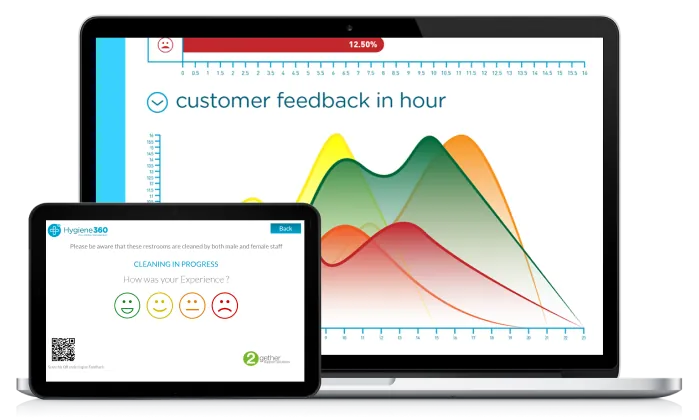
- Modern Washroom Management System: shift, cleaning-schedule and issue-reporting software for a facilities-management company. Relevant if you run industrial services or a B2B field team.
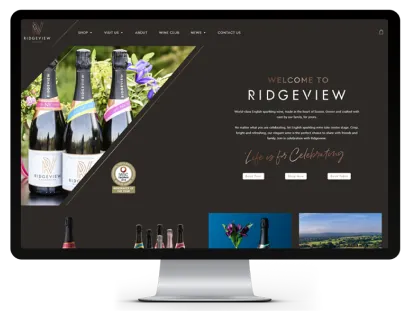
- Website for a Winery: a site with tour, event and table booking, for venues that sell experiences.
We don’t yet have a manufacturing marketing case study to show you. We’d rather say so than dress something up.
Sources
-
US Census Bureau, Population Estimates Vintage 2025, CBSA 16980. https://www2.census.gov/programs-surveys/popest/datasets/2020-2025/metro/totals/cbsa-est2025-alldata.csv ↩
-
American Community Survey 2024 1-year, Chicago-Naperville-Elgin metro (via Census Reporter). https://api.censusreporter.org/1.0/data/show/latest?table_ids=B25035,B25034,B25003,B25040,B25024,B03003&geo_ids=31000US16980 ↩ ↩2 ↩3
-
US Census Bureau, Building Permits Survey, 2025 annual by CBSA. https://www2.census.gov/econ/bps/CBSA%20(beginning%20Jan%202024)/cbsa2025a.txt ↩
-
US Census Bureau, County Business Patterns 2023, metro file. https://www2.census.gov/programs-surveys/cbp/datasets/2023/cbp23msa.zip ↩ ↩2 ↩3 ↩4 ↩5 ↩6
-
BEA Regional Price Parities 2024 via FRED, RPPALL16980. https://fred.stlouisfed.org/series/RPPALL16980 ↩
-
Google Trends, Chicago DMA interest and 5-year weekly series, pulled 2026-10-18. https://trends.google.com/trends/ ↩ ↩2 ↩3 ↩4 ↩5 ↩6 ↩7 ↩8 ↩9 ↩10
-
US Bureau of Labor Statistics, Economy at a Glance, Chicago-Naperville-Schaumburg metropolitan division (manufacturing employment, 2026). https://www.bls.gov/eag/eag.il_chicago_md.htm ↩
-
NBC Chicago, coldest temperatures in six years (Jan. 15, 2025). https://www.nbcchicago.com/weather/chicago-coldest-temperatures-six-years-arctic-air/3647612/?amp=1 ↩ ↩2
-
Levelset, Illinois contractor licensing (secondary; confirm with IDFPR, IDPH and the Chicago Department of Buildings). https://levelset.com/blog/illinois-contractor-licensing ↩ ↩2 ↩3 ↩4 ↩5
-
Google Business Profile Help, How to improve your local ranking on Google. https://support.google.com/business/answer/7091?hl=en ↩
Figures checked October 2026.
The trades and practices we'd start with in Chicago.
Home Services
Roofing, HVAC, plumbing, electrical, landscaping, pest control and every trade in between.
See the playbookManufacturing, Events & Venues
Manufacturers, event spaces, event organizers and B2B companies with longer sales cycles.
See the playbookMedical & Health
Dentists, chiropractors, vets, med spas and specialty practices.
See the playbookWhere we'd put the first dollar.
Voice & Chat Agents
After-hours and overflow answering, website chat and SMS, all booking into your calendar.
Explore AI Agents & AutomationWorkflow Automation
Connect the tools you have. Stop re-typing between them.
Explore Digital MarketingPaid Ads
Google, Meta and Local Services Ads tuned for cost per job, not per click.
Explore Digital MarketingSEO & Local SEO
Show up when people near you search.
ExploreWork from your industry.
None of these clients are in Chicago; they show how we work in your industry.
-

Ecostar Pest Control
Ecostar Pest Control serves homes and businesses. We used SEO, Google Ads and Google Business Profile work to grow its traffic and leads. Read the case study -
Modern Washroom Management System
A web-based mobile app and analytics portal that automates washroom cleaning, staff shifts, feedback and issue reporting for Hygiene360. Read the case study -
Website For Winery
A WordPress and WooCommerce website for a UK sparkling wine producer, with an online shop, vineyard tour booking, events and table booking. Read the case study
Questions people ask us
You're not in Chicago. How does that work?
Remotely, with a named strategist and a weekly summary. Our calendar runs on Central time, same as yours, so there's no time-zone math. We don't have a Chicago office and won't pretend to.
When should a Chicago HVAC company spend the most?
October through January, and harder during a cold snap. Over five years of search data, the biggest weeks for furnace and frozen-pipe searches in the Chicago area were the coldest weeks on the calendar.
Should my site target Chicago or the suburbs?
The neighborhoods and suburbs you actually serve. Google weighs how close you are to the person searching, and Chicagoland is far too big for one page to rank everywhere.
Do you work with manufacturers?
Yes, it's one of our four focus industries. The work looks different from home services: fewer, bigger inquiries, longer buying cycles, and qualification before an RFQ ever reaches your sales team.
Should we market in Spanish?
About 24% of metro Chicago residents are Hispanic or Latino. If your team can take Spanish calls, it's worth testing Spanish ads and pages.
Will you take on my competitor?
Possibly. We keep it small: only a handful of companies in the same trade in any one metro, and we never share one client's data, ads or plans with another.
Planning your next season in Chicago?
Thirty minutes, no pitch deck. We look at your numbers and tell you what we'd do first, whether or not you hire us.